
How Solar Panels Work: A Simple Guide for Beginners
Understanding how solar panels work is the first step toward choosing the right solar energy system for your home or business. Solar panels convert sunlight into electricity through a process known as the photovoltaic effect. The electricity can then be used immediately, stored in batteries or supplied to the electrical grid.
With increasing electricity costs and growing interest in renewable energy, rooftop solar systems are becoming a practical option for homes, offices, factories, shops and agricultural properties. In this guide, we explain the solar panel working principle in simple terms.
What Is Solar Energy?
Solar energy is the light and heat received from the sun. Solar panels capture sunlight and convert its energy into electricity that can be used to operate lights, fans, appliances, machines and other electrical equipment.
Solar energy is renewable because sunlight is naturally replenished. A properly designed solar power system can help reduce dependence on conventional electricity sources and support cleaner energy use.
What Are Solar Panels Made Of?
Solar panels are made from photovoltaic cells, which are commonly manufactured using silicon. These cells contain semiconductor materials that respond to sunlight and produce direct current electricity.
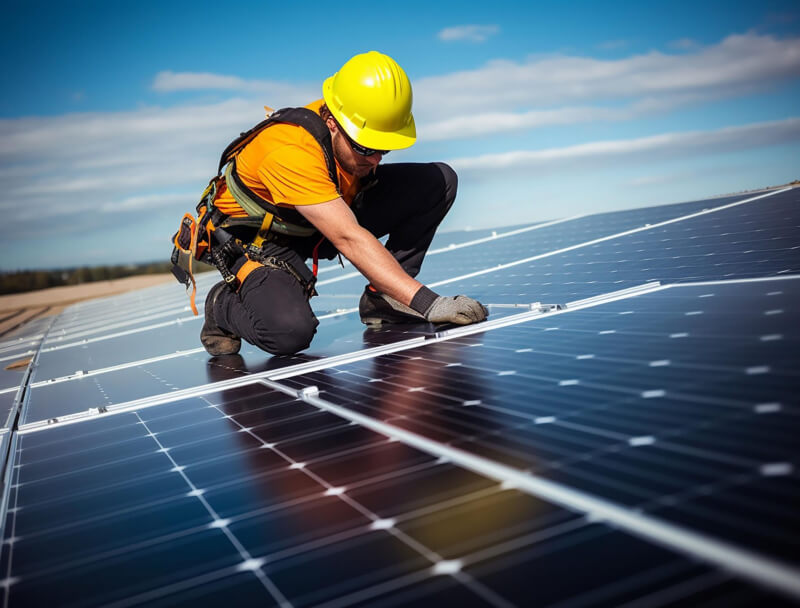
A solar panel also includes protective glass, an aluminium frame, wiring and a backsheet or protective layer. Multiple panels are connected together to create a solar array based on the electricity requirements of the property.
How Do Solar Panels Generate Electricity?
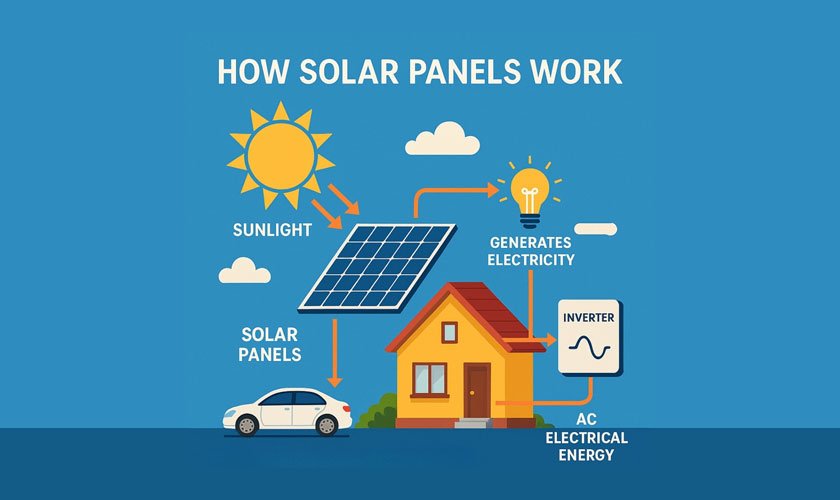
The process of generating solar electricity involves four main steps.

Step 1: Sunlight Reaches the Solar Cells
When sunlight falls on the photovoltaic cells, the energy from the sunlight activates electrons inside the semiconductor material.

Step 2: Solar Cells Produce DC Electricity
The movement of electrons creates direct current, also known as DC electricity. This is the first form of electricity produced by a solar panel.

Step 3: The Inverter Converts DC to AC
Most household and commercial appliances use alternating current, or AC electricity. The solar inverter converts the DC electricity from the panels into usable AC electricity.

Step 4: Electricity Powers the Property
The converted electricity can power lights, fans, computers, appliances, pumps, machines and other electrical equipment in a home or business.
What Happens to Extra Solar Power?
Depending on the type of solar system, unused electricity can be stored in batteries or exported to the electricity grid.
Battery Storage
A battery stores excess solar electricity for use after sunset, during cloudy periods or during a power interruption. Battery storage is particularly useful for properties that need backup power.

Net Metering
In a grid-connected solar system, surplus electricity may be exported to the electricity grid through net metering, subject to the applicable electricity regulations and approval process.
Types of Solar Power Systems
On-Grid Solar System
An on-grid solar system is connected to the electricity grid. It can reduce grid electricity consumption and may export surplus power through an approved net-metering arrangement.
Off-Grid Solar System
An off-grid system operates independently of the electricity grid and generally uses batteries to store electricity for use when sunlight is unavailable.
Hybrid Solar System
A hybrid solar energy system combines solar panels, battery storage and grid connectivity. It can provide greater flexibility for properties that need both electricity savings and backup power.
Why Choose Solar Energy?
Potential Electricity Savings
A correctly designed solar system can reduce the amount of electricity purchased from the grid. Actual savings depend on system size, energy consumption, sunlight, tariffs and operating conditions.
Renewable and Cleaner Energy
Solar energy uses sunlight instead of directly burning fossil fuels during electricity generation. It can support cleaner energy use for homes, businesses and industrial facilities.

Low Routine Maintenance
Solar panels generally require limited routine maintenance, such as cleaning, inspection and checking system performance. Quality installation and periodic servicing help maintain reliable operation.
Easy Performance Monitoring
Many modern solar inverters provide monitoring features that help property owners track electricity generation, system performance and possible faults.
Solar Panel Installation in Chhattisgarh and Odisha
Choosing the right solar company is important because system performance depends on site assessment, panel orientation, system design, inverter selection, installation quality and after-sales support.
UrjaCon Infratech Pvt Ltd provides solar energy solutions for residential, commercial and industrial requirements. The company serves customers across locations including Saraipali, Raigarh, Sarangarh, Mahasamund, Bargarh and Padampur.
Whether you are planning a rooftop solar system for your home, office, shop, factory or agricultural property, a professional site assessment can help determine the appropriate system capacity and installation requirements.
Contact UrjaCon for solar consultation and installation support.
Frequently Asked Questions About Solar Panels
How do solar panels generate electricity?
Solar panels use photovoltaic cells to convert sunlight into DC electricity. An inverter converts this DC electricity into AC electricity for use in homes and businesses.
Do solar panels work during cloudy weather?
Yes. Solar panels can still generate electricity during cloudy weather, although their output is generally lower because less sunlight reaches the solar cells.
Can solar panels generate electricity at night?
No. Solar panels need sunlight to generate electricity. At night, electricity can be supplied through a battery storage system or the electricity grid.
How long do solar panels last?
Most quality solar panels are designed to operate for approximately 25 to 30 years. Their actual service life depends on product quality, installation conditions and maintenance.
Final Thoughts
Solar panels work by converting sunlight into DC electricity through photovoltaic cells. An inverter then converts that electricity into AC power for homes, offices, shops and industrial facilities. Depending on the system design, excess electricity can be stored in batteries or exported to the grid.
Understanding how solar panels work can help you make better decisions about rooftop solar, hybrid solar energy systems and long-term energy planning. For reliable results, choose a qualified solar installation company that can assess your property and recommend a suitable system.
To discuss your solar requirements, contact UrjaCon Infratech Pvt Ltd for solar consultation and installation support in Chhattisgarh and Odisha.